
2024-04-23 | Language-Based Agents in Focus: Final Conference of the Human-Agent Interaction Research Network
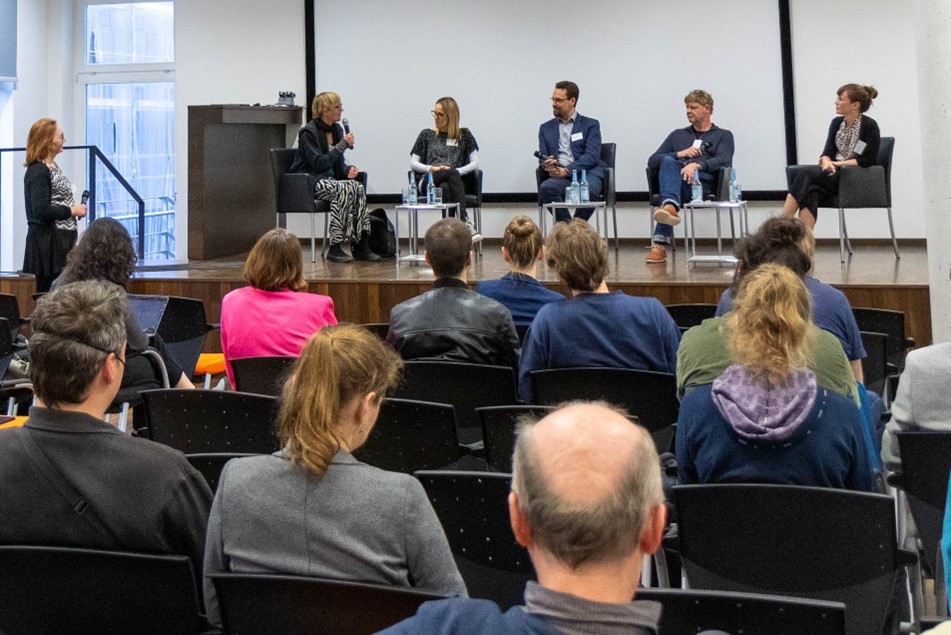
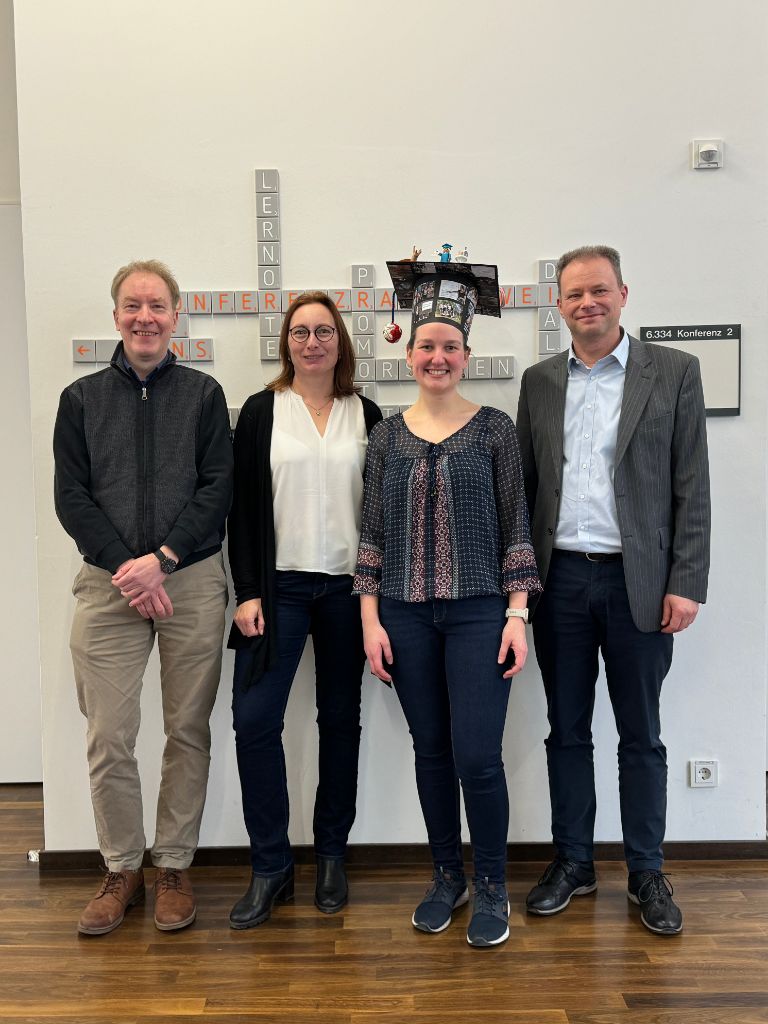
For the past four years, the IWM has been investigating how humans interact with speech-based agents as part of the Human-Agent Interaction (MAI) research network. On 11 April, the network held its final conference.
About the MAI Network
Recognising the potential of these technologies in 2020, the IWM established the MAI network to investigate the acceptance and performance of language assistants. The network consisted of eight interdisciplinary projects, each of which paired an IWM PhD student with an external partner to investigate the acceptance of language agents and their impact on human performance in different contexts, such as learning with digital tutors, consumer interactions with chatbots, AI in science communication, and AI support in negotiations.
Highlights of the final conference
At the final conference, Prof Dr Sonja Utz, the network coordinator, gave an overview of the network and project highlights. The poster session provided an opportunity for in-depth discussions with the network’s scientists, with an additional 17 posters on human-machine communication topics. The session also included three keynote lectures.
Keynotes
The conference concluded with a public panel discussion on the impact of ChatGPT & Co. on individuals and society. Moderated by Eva Wolfangel, Dr Anne Scherer (Delta Labs), Dr Sarah Fischer (Bertelsmann Foundation), Prof Leo van Waveren (RPTU Kaiserslautern) and Prof Peter Gerjets (IWM) discussed the potential applications of generative AI such as ChatGPT.
Panelists discussed the benefits of generative AI, such as outsourcing repetitive and boring tasks and maintaining consistency in customer interactions, as well as potential longer-term societal implications.
Conclusion
The conference facilitated connections within the German human-machine communication community and highlighted ongoing research needs in the field.
Recordings of the keynotes and the panel discussion are available on the IWM YouTube channel: https://www.youtube.com/@IWMtue
(Note: Individual videos will be available in the coming days.)
About the MAI Network
Recognising the potential of these technologies in 2020, the IWM established the MAI network to investigate the acceptance and performance of language assistants. The network consisted of eight interdisciplinary projects, each of which paired an IWM PhD student with an external partner to investigate the acceptance of language agents and their impact on human performance in different contexts, such as learning with digital tutors, consumer interactions with chatbots, AI in science communication, and AI support in negotiations.
Highlights of the final conference
At the final conference, Prof Dr Sonja Utz, the network coordinator, gave an overview of the network and project highlights. The poster session provided an opportunity for in-depth discussions with the network’s scientists, with an additional 17 posters on human-machine communication topics. The session also included three keynote lectures.
Keynotes
- Assistant Professor Minha Lee (Eindhoven University) discussed the design of voice agents to express moral emotions and addressed the attribution of blame or punishment to these agents.
- Prof. Dr. Nils Köbis (Research Center Trustworthy Data Science and Security & University of Duisburg-Essen) presented research on how AI influences human ethical behaviour, showing that people are more likely to make unethical decisions when guided by AI or when they entrust decisions to AI.
-
Prof. Dr. Detmar Meurers , who took up a professorship in AI in Education at the IWM in April, shed light on the role of AI in language acquisition, particularly in foreign language learning. He emphasised that while AI alone cannot solve problems due to its lack of insight into learners and their goals, the development of targeted and adaptable AI tools offers significant opportunities.
The conference concluded with a public panel discussion on the impact of ChatGPT & Co. on individuals and society. Moderated by Eva Wolfangel, Dr Anne Scherer (Delta Labs), Dr Sarah Fischer (Bertelsmann Foundation), Prof Leo van Waveren (RPTU Kaiserslautern) and Prof Peter Gerjets (IWM) discussed the potential applications of generative AI such as ChatGPT.
Panelists discussed the benefits of generative AI, such as outsourcing repetitive and boring tasks and maintaining consistency in customer interactions, as well as potential longer-term societal implications.
Conclusion
The conference facilitated connections within the German human-machine communication community and highlighted ongoing research needs in the field.
Recordings of the keynotes and the panel discussion are available on the IWM YouTube channel: https://www.youtube.com/@IWMtue
(Note: Individual videos will be available in the coming days.)